Weld spatter, anti-spatter residue, and cured adhesive shut down more automotive cells than mechanical failure does. ODIB cleans robotic weld cells, adhesive and sealer cells, and dispensing equipment in place — no water, no chemicals, no abrasive media, and in most cells no teardown or fixture removal. In many cases the cell is back in production the same shift, once your inspection and sign-off are complete.
The problem
- Weld spatter and anti-spatter buildup on fixtures, clamps, and tooling surfaces
- Cured structural adhesive, sealer, and primer overspray on rails, fixtures, and cell components
- Residue on locating pins and datum surfaces that degrades repeatability and quality metrics
- Downtime windows too short for teardown-and-scrub cleaning
Why conventional cleaning fails in a cell
Water and solvents don’t belong around robots, controllers, and proximity sensors. Abrasive blasting changes tooling geometry and contaminates the cell with media. Hand scraping is slow, inconsistent, and hard on locating surfaces — and usually means pulling fixtures out of the cell, which turns a cleaning job into a re-qualification job.
Why dry ice works
- In place: fixtures, rails, and tooling cleaned inside the cell — alignment and qualification stay intact
- Dry and non-conductive: no moisture near electrical cabinets, dress packs, or sensors
- Non-abrasive: pressure and pellet size tuned to the substrate, so tooling geometry is preserved
- No secondary waste: the CO₂ sublimates; only the removed contaminant is left to sweep up
Proven in a Windsor production cell
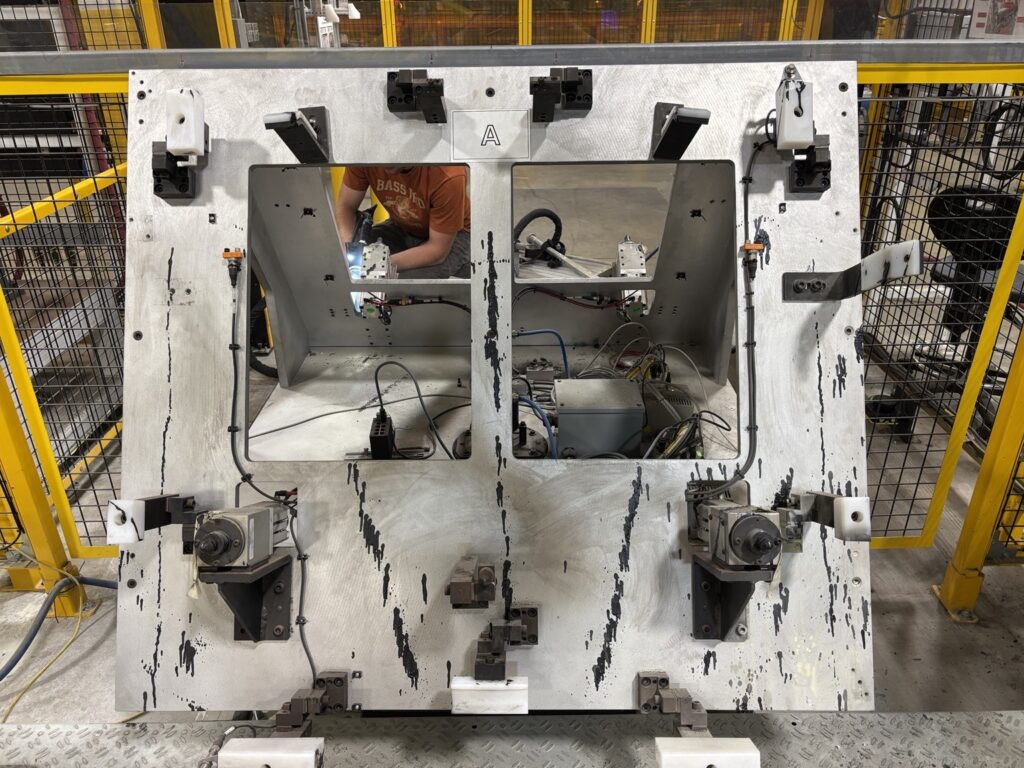
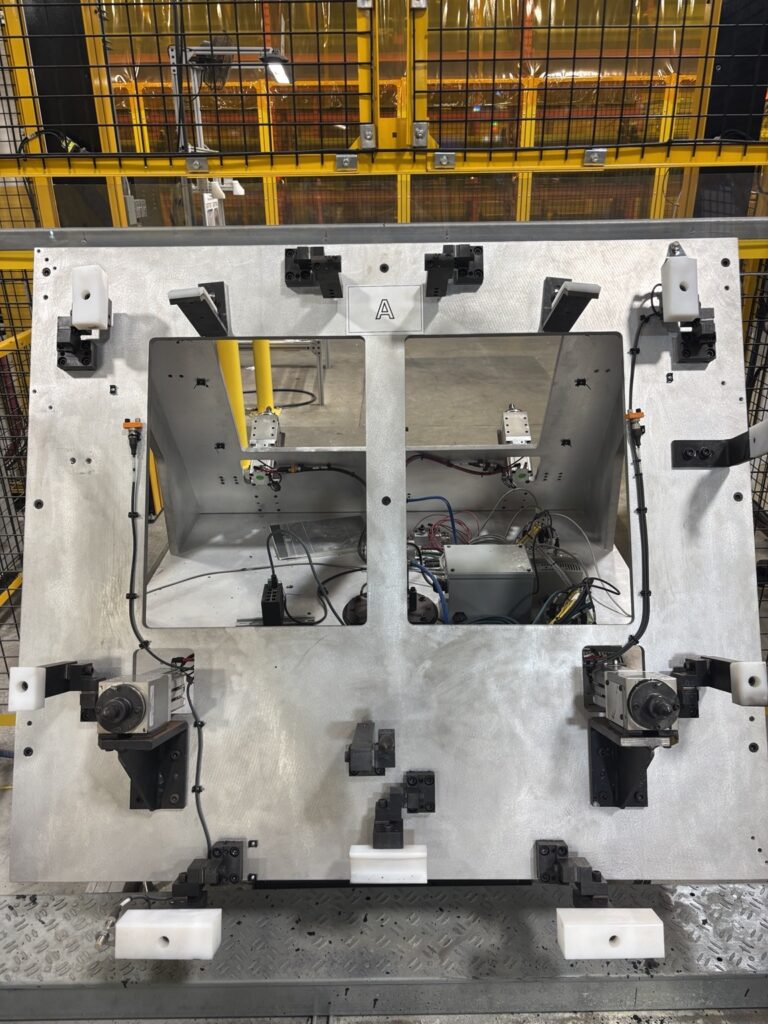
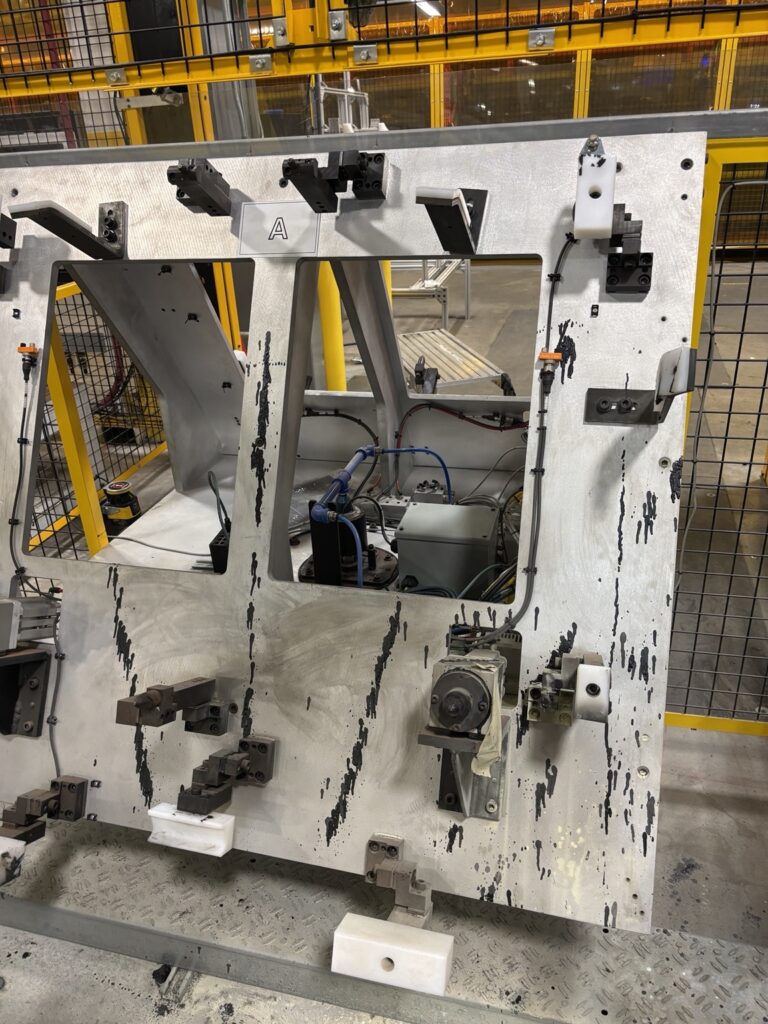
We removed cured adhesive and primer from a robotic production cell’s fixtures, aluminum rails, and surrounding components at a Windsor automotive plant — in place, documented with before/after photos. Read the full case study.
What we clean
- Weld fixtures, clamps, and tooling
- Adhesive and sealer dispensing cells and surrounding equipment
- Rails, guarding, and cell structure
- Conveyors and transfer equipment within the cell
Related: EV battery & automotive line cleaning · industrial equipment cleaning · serving Windsor-Essex and all of Southwestern Ontario. Pricing works like every ODIB job — see what dry ice blasting costs in Ontario.
Book around your production window
Most cell cleans run during scheduled downtime — evenings, weekends, shutdowns. Text photos of the cell and contamination to 226-627-4878 for a fast quote, call direct, or request a site review. COI and documentation provided before mobilization.
FAQ
Does dry ice blasting damage weld fixtures or tooling?
Dry ice is soft — about 3 on the Mohs scale — and we tune pressure and pellet size to the substrate. Fixtures, locating pins, and tooling geometry are preserved; for sensitive surfaces we run a test patch and confirm with you before continuing.
Can the cell stay in place during cleaning?
Yes. Cleaning in place is the point — fixtures and rails stay mounted, so alignment and qualification are not disturbed. Work is done during planned downtime after a joint safety review and lockout/tagout per your site requirements.
How long does a weld cell clean take?
Scope-dependent: a single fixture may take an hour or two; a full cell is typically a shift. Every job starts with photos or a free site review, and you get a written timeline before we mobilize.
Request a quote
Related reading and service areas
Recent work
From a robotic production cell we cleaned in place at an automotive assembly plant in Windsor: