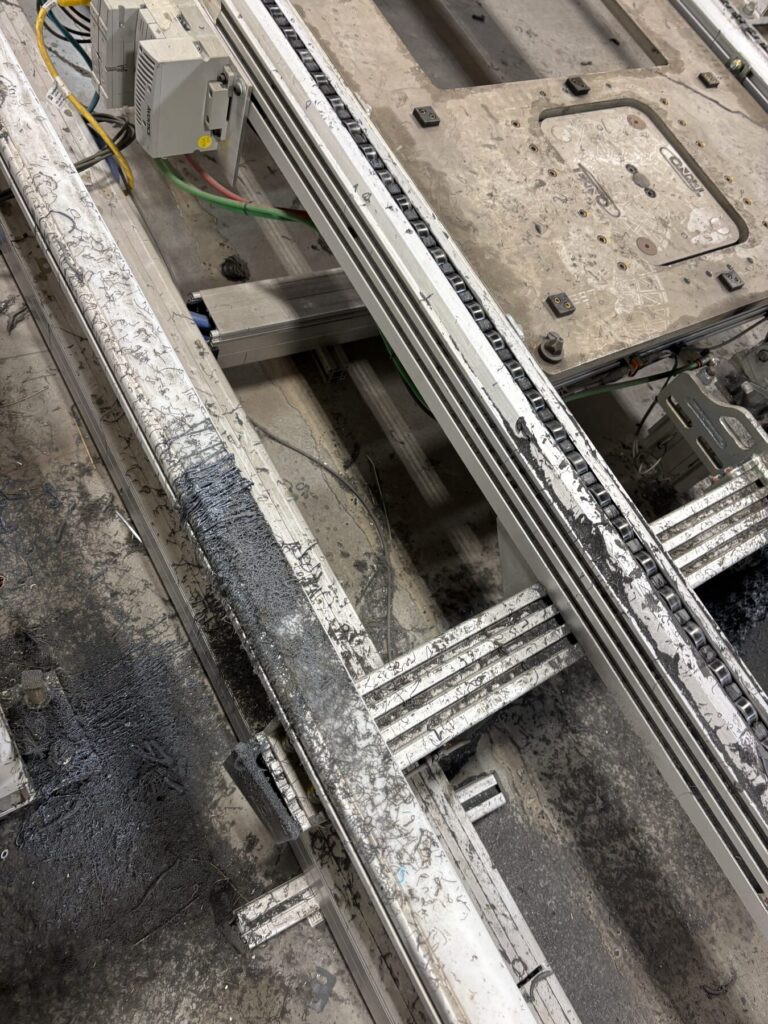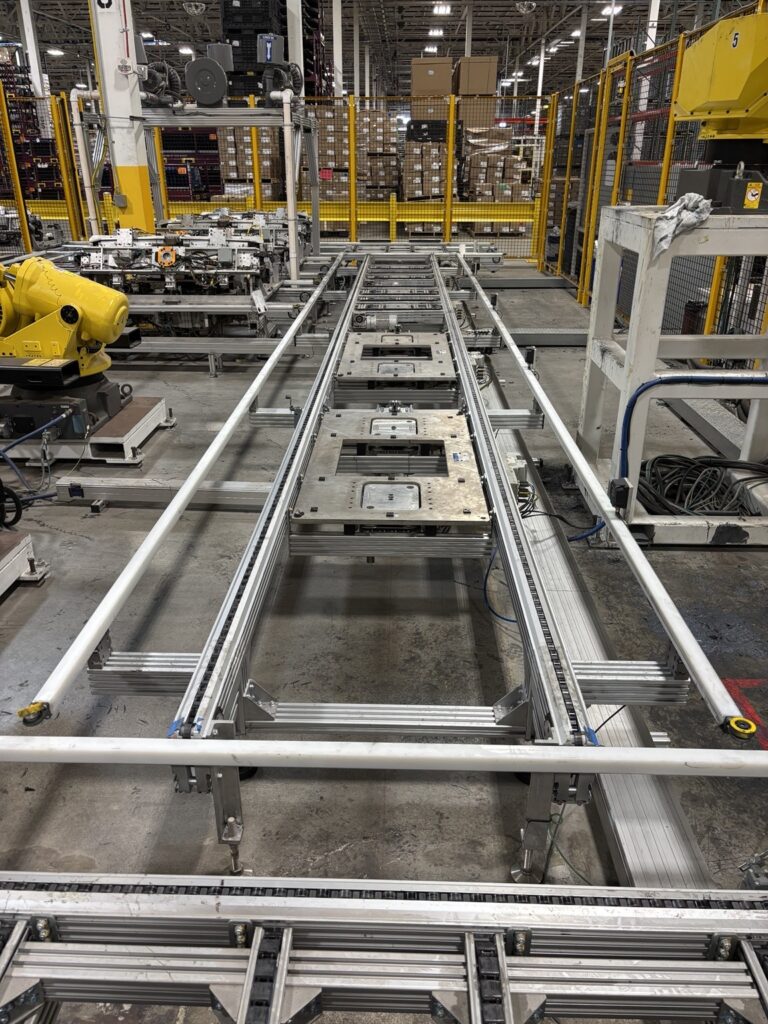
When a production line stops, the meter is running on every minute of downtime. Dry ice blasting cleans your equipment in place — typically no teardown, no water, no chemical wash, no rinse cycle. In many cases, lines are back in production the same shift after client inspection and sign-off.
ODIB cleans presses, conveyors, mixers, ovens, molds, tooling, robotic cells, electrical panels, gearboxes, motors and structural steel across Southwestern Ontario. Mobile crew with Cold Jet equipment and a diesel compressor — we bring everything to you.
Where this saves you money
The economic case for dry ice on industrial equipment is almost always about three things:
- No teardown — the equipment stays bolted together and energized where safe
- No rinse — you don’t lose a second shift waiting for the line to dry
- No secondary waste — no spent media, no chemical drum, no liquid for disposal
A typical packaging-line clean that takes 8 hours of shutdown the conventional way (degrease, scrub, rinse, dry, sanitize) runs 3–4 hours with dry ice and skips the rinse-and-dry phase entirely.
Equipment we clean
Production lines
Conveyors, accumulators, transfer points, dividers, depositors, fillers, cappers, sleevers, labelers, case packers. Build-up that normally requires hand-scraping typically comes off in a single pass.
Molds and tooling
Injection molds, blow molds, extrusion dies, stamping dies, and core-pack tooling. Dry ice doesn’t alter the cavity surface or polish — geometry is preserved. Cleans hot molds without thermal-shocking them.
Electrical panels and motor cabinets
MCCs, switchgear, transformers, drives, control cabinets. Non-conductive and dry — clean energized equipment where your safety procedure allows it.
Robotic and weld cells
Weld spatter, anti-spatter, slag, oil mist, and adhesive overspray. Robot arms, fixtures, hold-down clamps, sensors and cameras all cleaned in-place. Reduces line-side maintenance time by 40–60% in typical body-in-white cells.
Heat exchangers and fin-fan banks
Air-side fouling, dust, oil mist, and chemical residue on coils, fins and tube bundles. Restores thermal performance without bending fins. See our fin-fan cleaning page for the deep dive.
Structural steel and overhead
Beams, joists, ductwork, lighting fixtures, and ceiling fans. Dust and process residue come off without spilling moisture onto product below.
Industries we serve
- Automotive parts manufacturing
- EV battery and advanced manufacturing
- Plastics, packaging and printing
- Food and beverage processing
- Pharmaceutical and personal care
- Pulp, paper, and forest products
- Metal stamping and machining
How a typical project runs
Most industrial cleans run as a planned shutdown or a holiday window. The sequence is straightforward:
- Free site review — we walk the equipment, photograph it, confirm scope and timing
- Quote — fixed-price for well-defined scope, day-rate for larger shutdowns
- Pre-job — we send certificate of insurance, JSA, and operator credentials
- On-site — crew mobilizes, sets up containment, runs the work
- Sign-off — walk-through with your maintenance lead, before/after photos
Pricing
Industrial equipment is most often quoted day-rate because contamination level and access vary widely. A two-person crew with full equipment typically runs $2,400–$3,200/day in Southwestern Ontario, plus dry-ice consumption. For repeat work on a fixed scope (e.g., a quarterly conveyor clean) we can move to a fixed-price contract. See our cost guide for a deeper breakdown.
FAQ
Can the equipment stay running while you clean?
Sometimes. Conveyors, fans, and structural steel can usually be cleaned while running. Tooling, molds, and electrical panels require de-energization per your safety procedure — but no cooling, no dismantling, and no rinse.
Do you supply dry ice or do we?
We supply everything: pellets, equipment, compressor, hoses, PPE, and operator. You provide site access, parking for the truck, and a power tie-in if we run extended hours.
How clean is “clean”?
For visual cleanliness, dry ice gets to bright metal or factory-finish on most surfaces in one pass. For CFIA/FDA validation, you verify with swabs exactly as you would after any other cleaning step. Dry ice removes the soil load without leaving chemical or water residue behind, so there is nothing extra to confound the swab — your sanitation program handles the sanitize step as usual.
Will it damage paint, labels, or sensors?
We protect them. Sensors and labels you want preserved get masked before we start, and nozzle aggression is tuned to the substrate — non-abrasive settings on hard surfaces, reduced pressure for anything delicate. We confirm the approach at the site review.
Book a site visit
Tell us your facility and the equipment you want cleaned. We’ll book a free site review and give you a written scope and quote inside 48 hours. Call 226-627-4878 or email scott@ontariodryiceblasting.com.
Request a quote
Related reading and service areas
Recent work
Production equipment cleaned in place, with the line still in the plant: