Fin Fan & Heat Exchanger Cleaning
Restore air-cooled heat exchanger and fin fan efficiency with a non-abrasive process that protects fins, fans, and tube bundles. Mobile across Southwestern Ontario.
Why fin fans need cleaning
Air-cooled heat exchangers and fin fans accumulate insects, pollen, dust, oil mist, and process residue between the fins. As fouling builds, airflow drops, the heat transfer rate falls, and the upstream process loses efficiency — sometimes by 20–40% before it shows up in process data.
Most operators clean fin fans with high-pressure water, foaming chemicals, or compressed air. All three have problems: water flattens fins, chemicals attack adjacent components, and compressed air alone does not lift sticky residues.
Why dry ice blasting works on fin fans
- Non-abrasive on fin tips. CO₂ pellets are softer than aluminum or copper fins. We lift the residue without flattening or curling the fin material.
- Dry process. No water, no rinse-down, no water introduced, so none of the moisture-ingress risk that wet methods bring to adjacent electrical or process equipment.
- No chemical residue. Nothing left behind to react with refrigerant, glycol, or process fluids.
- Cleans in-place. In most cases the bundle stays in place — no pulling the bundle or breaking flanged connections. Often cleaned with the unit still warm, with fans locked out during blasting.
- Restores designed airflow. Removes the air-side fouling that water and chemicals leave behind.
Typical fin fan job
Pre-cleaning: we measure airflow / inlet-outlet temperature differential where possible to establish a baseline.
Cleaning: dry ice pellets are blasted between the fins at a pressure tuned to the fin material and density. We work both sides of the bundle if access allows. The Cold Jet PCS 60 is our usual machine for this; the Aero 80HP is brought in for very large or heavily fouled bundles.
Post-cleaning: we re-measure airflow and differential. Most operators see a 15–30% improvement in heat transfer immediately, with corresponding upstream process efficiency gains.
Industries we serve with fin fan cleaning
- Petrochemical and refining
- Power generation (cogen, peaking plants, HRSGs)
- Food and beverage processing
- HVAC and commercial cooling
- Manufacturing — extruders, compressors, hydraulic coolers
How a typical heat exchanger cleaning project runs
Most fin-fan and heat exchanger work is scheduled into a planned shutdown — refinery turnaround, petrochem outage, chiller offline window. ODIB integrates with the turnaround coordinator: certificate of insurance, JSA, operator credentials, and method statement submitted in advance. On site, the crew works the bundle section by section, restoring fin clearance and removing the air-side fouling that’s degrading thermal performance. We can usually work alongside other shutdown trades without conflicting access.
Pricing
Fin-fan and heat exchanger cleaning is quoted as a project because the work is consumption-driven — bigger banks take more dry ice. We scope it after reviewing bank size and fouling. For multi-bank refinery and petrochem turnarounds we contract for the full outage scope. See our cost guide for how quotes are built.
FAQ
Will it bend the fins?
Not when blasted correctly. We tune pressure and standoff to the fin material and density, so the pellets lift fouling off the surface without the impact loads that flatten fins during water-blasting or brush cleaning. We inspect fin condition with you before and after.
How much thermal performance recovery should we expect?
Depends on starting condition. A heavily fouled air-cooler with restricted fin clearance typically recovers most of its design approach temperature after a thorough clean. We document fin clearance and rough thermal estimates before and after.
Can you work on operating fans?
No — fan blades must be locked out and the fan motor de-energized before we approach the bundle. That’s a hard safety requirement, not a flexibility issue.
Do you handle SRU and chiller coils?
Yes. SRU air-coolers, ammonia/glycol chiller coils, and process condensers are all standard work. We coordinate with the unit’s safety procedures on access and isolation.
Case study
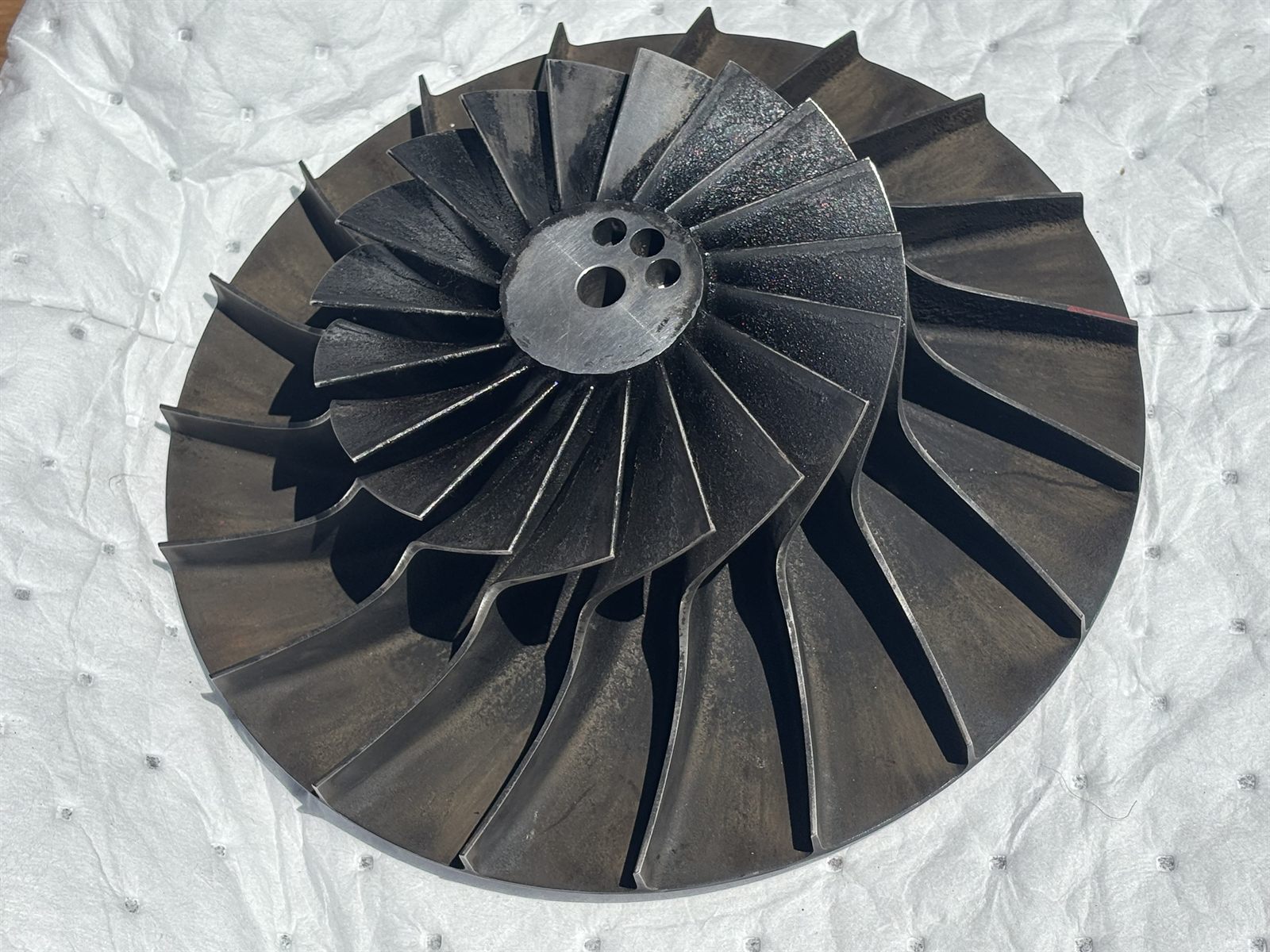
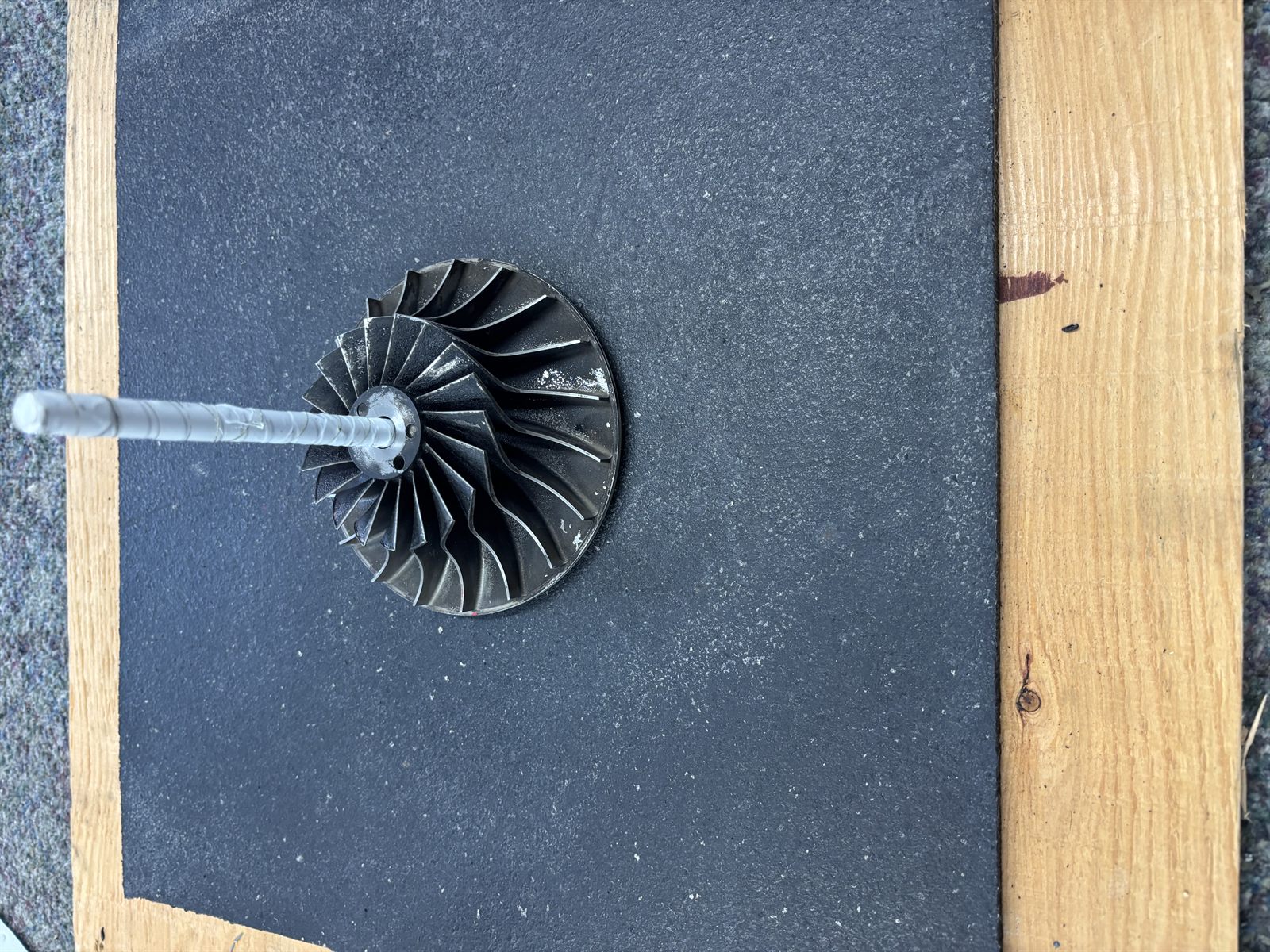
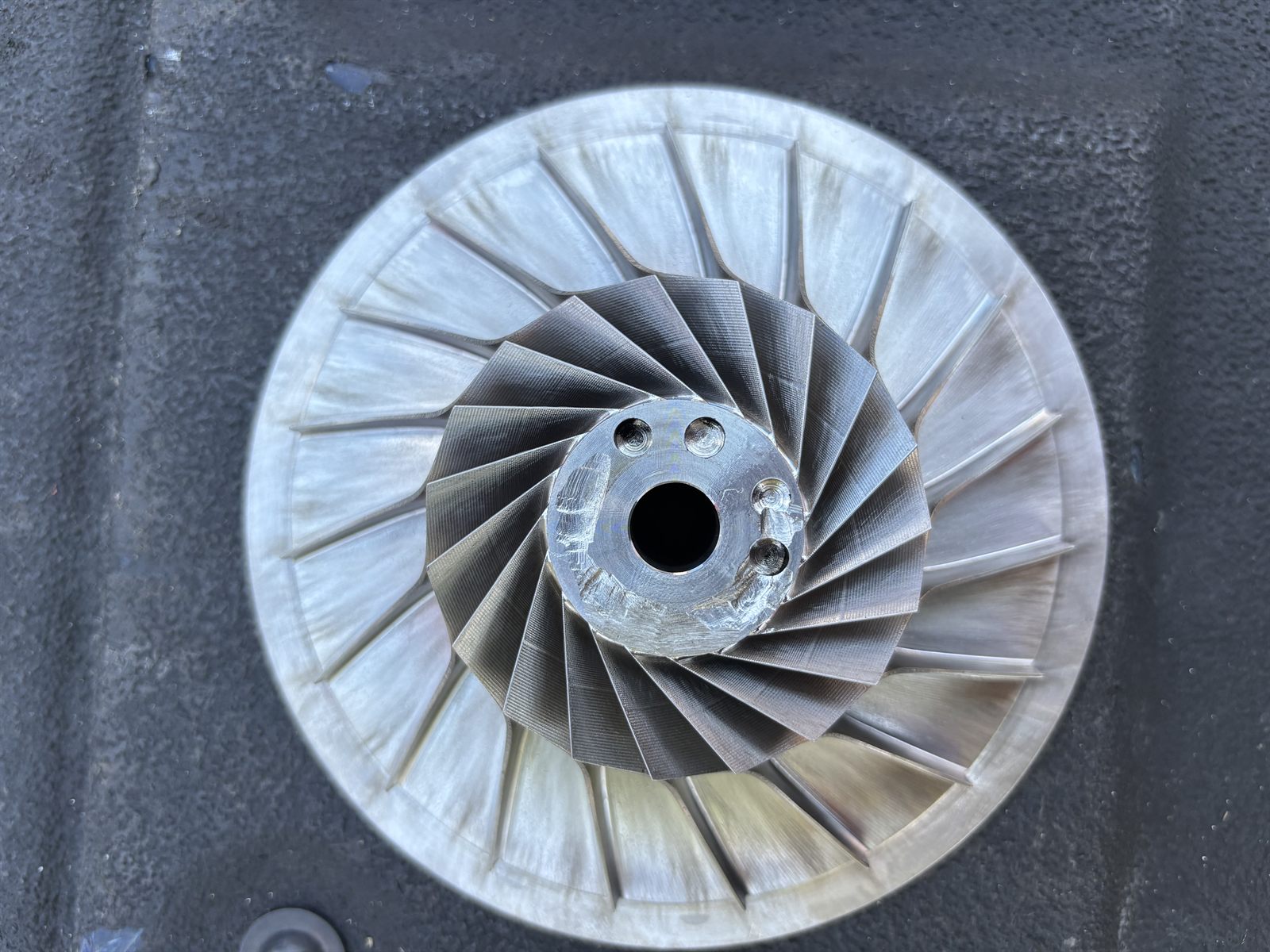
Fin Fan Impeller Cleaning – Sarnia, Ontario — three carbon-fouled fin fan impellers cleaned to bare parent metal on the bench, with no metal removed and the balance state untouched. Before-and-after photos included.
Request a quote
Related reading and service areas
Recent work
Three carbon-fouled fin fan impellers cleaned to bare parent metal in Sarnia: