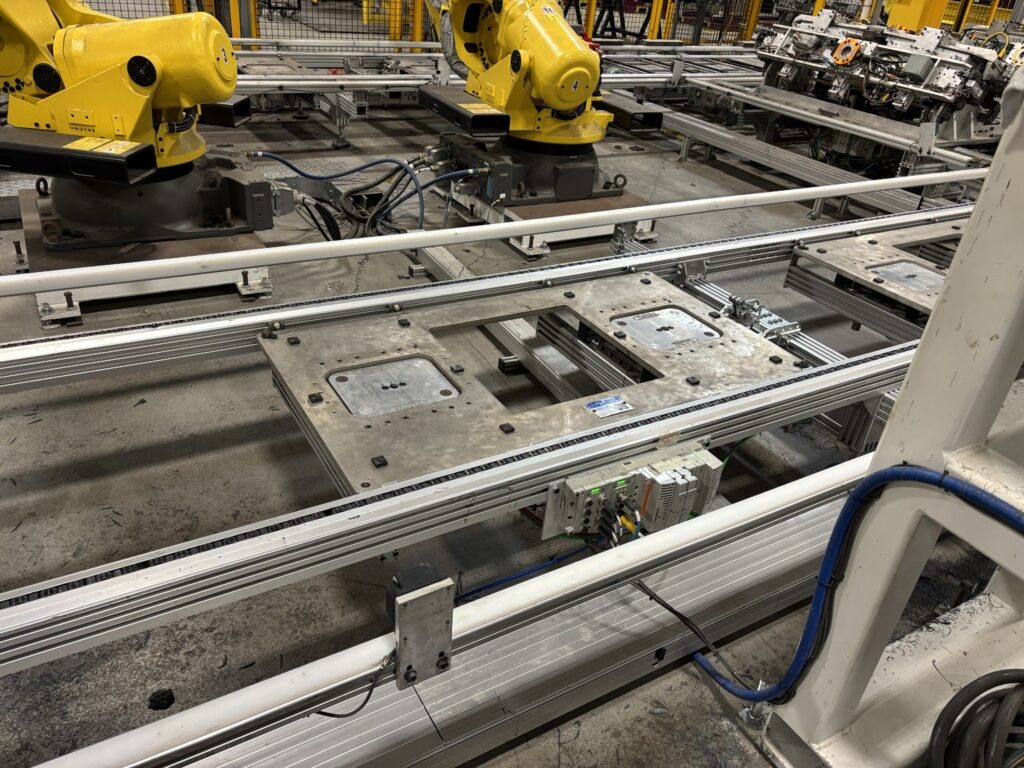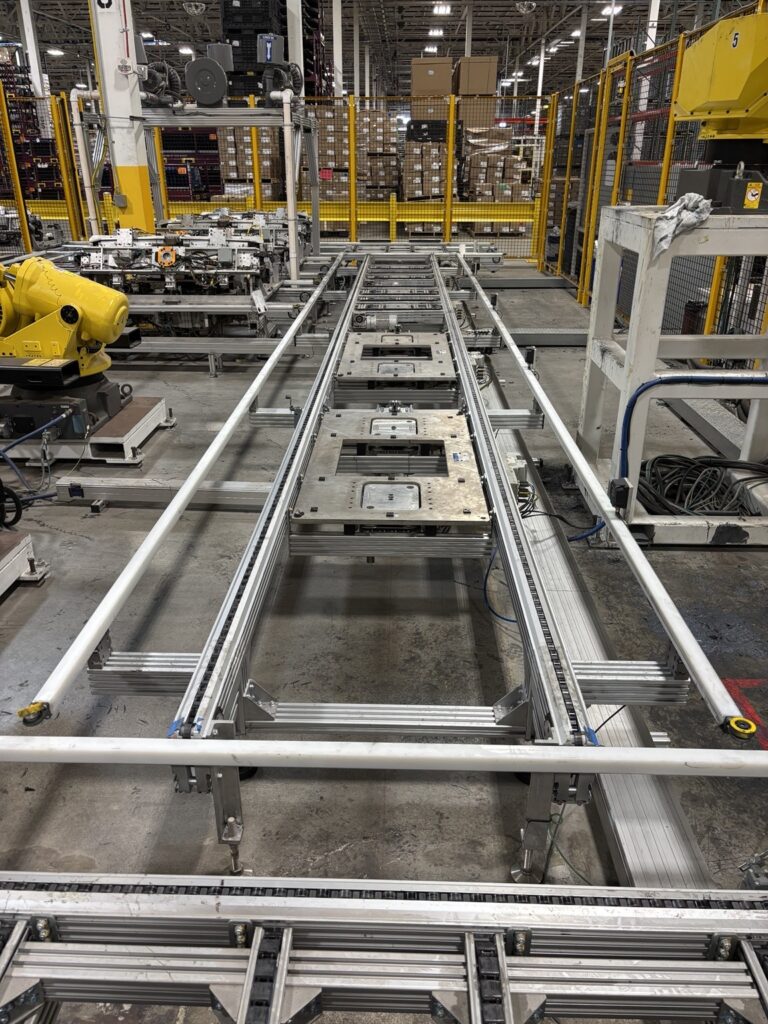
Automotive in Southwestern Ontario isn’t what it was ten years ago. The Stellantis NextStar battery plant, the parts manufacturers running ESD-sensitive lines, the stamping and weld cells supplying everyone from Tier 1 down to small machining shops — they all share the same cleaning problem. No water near the line. No abrasive. No conductive residue. No multi-shift downtime.
Dry ice blasting was built for this. ODIB cleans automotive and EV-related production equipment in-place across Windsor-Essex, Chatham-Kent, London and Sarnia-Lambton.
EV battery line cleaning
Battery cell, module, and pack assembly lines are unusually demanding to clean. Lithium-iron and NMC chemistries are intolerant of moisture. Coatings on electrode tabs are intolerant of abrasive media. Cell-handling robotics are intolerant of conductive dust. ESD requirements limit chemical use.
Dry ice solves the entire matrix: non-conductive, no moisture, no residue, no abrasive. Surfaces typically ready for downstream electrode work in a single pass — verified against your cleanliness spec before sign-off.
Where we work on EV lines
- Electrode coating residue on roll-to-roll equipment
- Slurry build-up on mixing and de-airing vessels
- Adhesive overspray in cell assembly cells
- Dust and oxidation on busbars and current collectors
- Robotic gripper and end-effector cleaning
- Cell-handling and stacking station structural steel
Body-in-white and weld cells
Spatter, anti-spatter, slag, glue overspray, and oil mist accumulate fast on weld cell hardware. Conventional cleaning means de-energize, ladders, scrapers, solvents, and a shift lost. With dry ice, a typical 6-station weld cell cleans in 2–4 hours during planned downtime.
Typical surfaces
- Weld guns, tips, and shanks
- Robotic arms, end-of-arm tooling, and dress packs
- Hold-down clamps, fixtures, and locating pins
- Floor plates, light curtains and safety bollards
- Light fixtures, ductwork and structural steel inside the cell
Engine bays, transmission and powertrain
Pre-rebuild engine and transmission cleans, dynamometer cells, and powertrain test benches. Removes carbon, oil varnish, coolant residue and bushing stains with little to no teardown — most surfaces cleaned with the assembly in place. Common for engine builders, restorers, and dealer-level service shops handling collision rebuild.
Why automotive plants pick dry ice
- No water — suited to work near sensors, drives, and electronics; energized-equipment decisions follow your lockout/permit procedures
- Non-abrasive — preserves geometry on tooling, dies, and weld tips
- Non-conductive — ESD-safe on battery and electronics lines
- No spent blast media — the ice sublimates, leaving only the removed contaminant to sweep up and dispose of normally
- In-place — robot programs, fixtures, and offsets stay where they are
How we schedule it
Most automotive work goes into planned shutdowns, holiday windows, or model changeovers. Smaller cells (4-hour cleans) can fit into a regular shift. We can also do split-shift cleans where half the line keeps running while the other half is blasted, then we swap.
Pricing
Automotive work is quoted day-rate or fixed-price depending on scope. EV battery line work is priced by station because contamination level varies dramatically by process step. Two-person crew, full equipment, dry-ice consumption included — typically $2,400–$3,800 per day. See the cost guide for ranges, or call us and we’ll quote your line.
FAQ
Can you clean live EV battery cells?
Cell cleaning at the chemistry level is not what we do. We clean the equipment around the cells — handling robotics, assembly fixtures, structural steel, exterior of housing, and busbar dust. Anything that contacts the cells themselves is handled to your spec.
Are you ESD-aware?
Yes. Crew works with ESD wrist straps, conductive footwear, and grounded equipment when required. Dry ice itself is non-conductive — that’s one of its core advantages on this work.
Will the cold damage delicate components?
Surface temperature drops briefly on impact, then recovers. We don’t blast directly onto sensors, glass, or thin-section composite parts without confirming with you first. Standard automotive structural steel and tooling tolerate the temperature without issue.
Do you have automotive references?
We can provide references on request — most automotive work is covered by an NDA so we don’t publish customer names without permission. Call us and we’ll arrange a reference call with a non-competing plant.
Quote your line
Send us a quick description of the cell or line and a few photos. We’ll come out for a site review and have your quote within two business days of the visit. Call 226-627-4878.
Request a quote
Related reading and service areas
Recent work
From an automotive production cell cleaned in place in Windsor: