
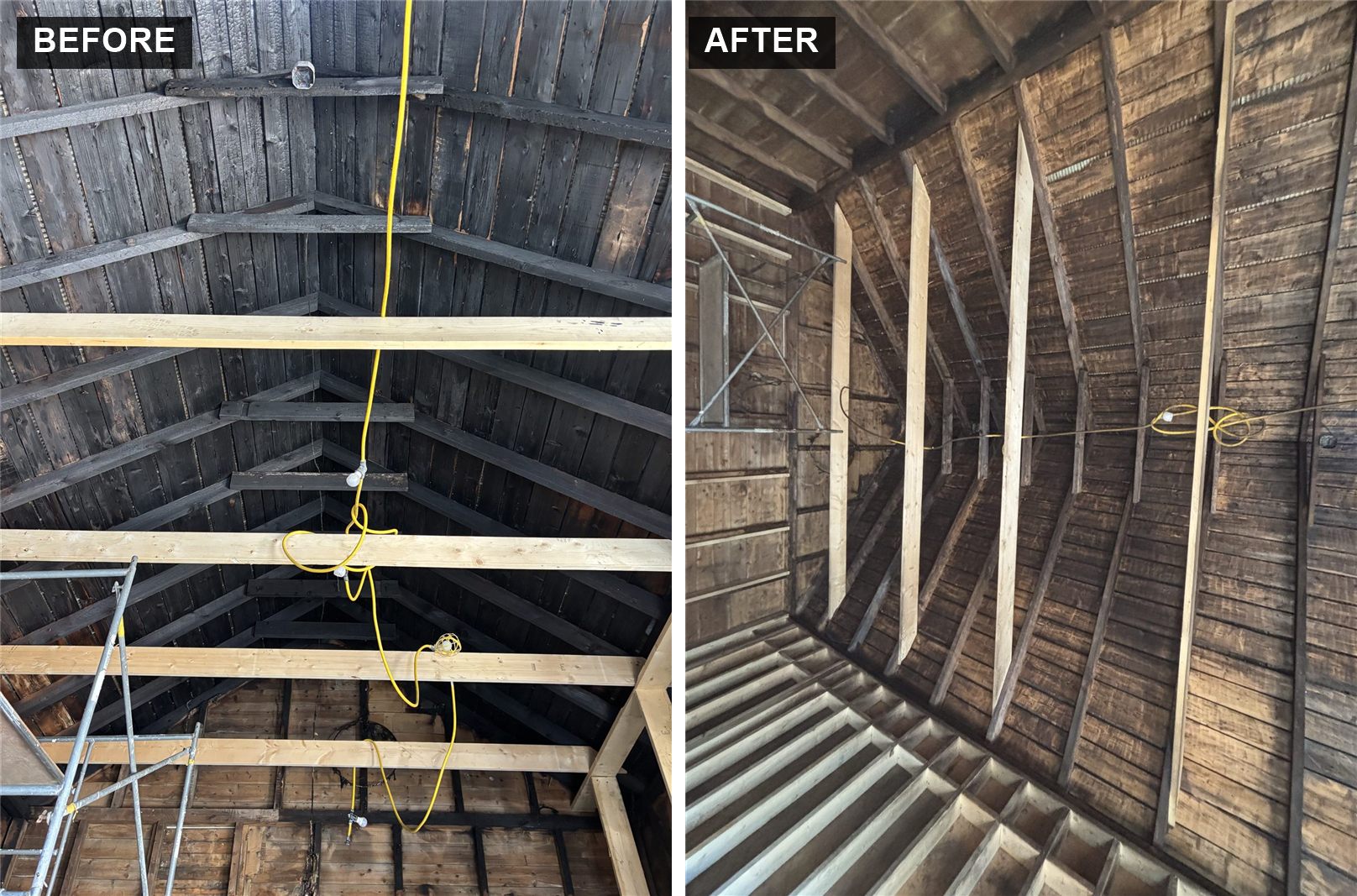
A restoration contractor working an insurance fire claim in St. Marys, Ontario brought us in for the roof of a detached garage and workshop. The fire had blackened the entire underside of the roof: rafters, collar ties and the original plank sheathing. The contractor had already completed an engineer’s structural review and shored the roof. What they needed from us was the soot and char gone from the framing being kept, back to sound wood, so the rebuild could carry on with clean original framing and none of it torn out.
The situation
After a structure fire, the framing that survives is still coated in soot and loose char. Soot is acidic, it carries the smoke odour, and nothing bonds properly over it. Before the next trade can seal, insulate or close in the roof, that layer has to come off.
On a roof like this one, the usual methods fall short. Hand scraping and wire brushing overhead is slow, tiring work, and the results vary from board to board. Sandblasting and soda blasting leave media in every gap between the sheathing planks, and inside an enclosed building that becomes a second clean-up. Wet cleaning soaks the wood the fire left intact, and that adds drying time and moisture risk to the claim. Tearing the roof out and replacing it is the most expensive answer, and on framing that is still sound it isn’t the right one.
Before: what we walked into
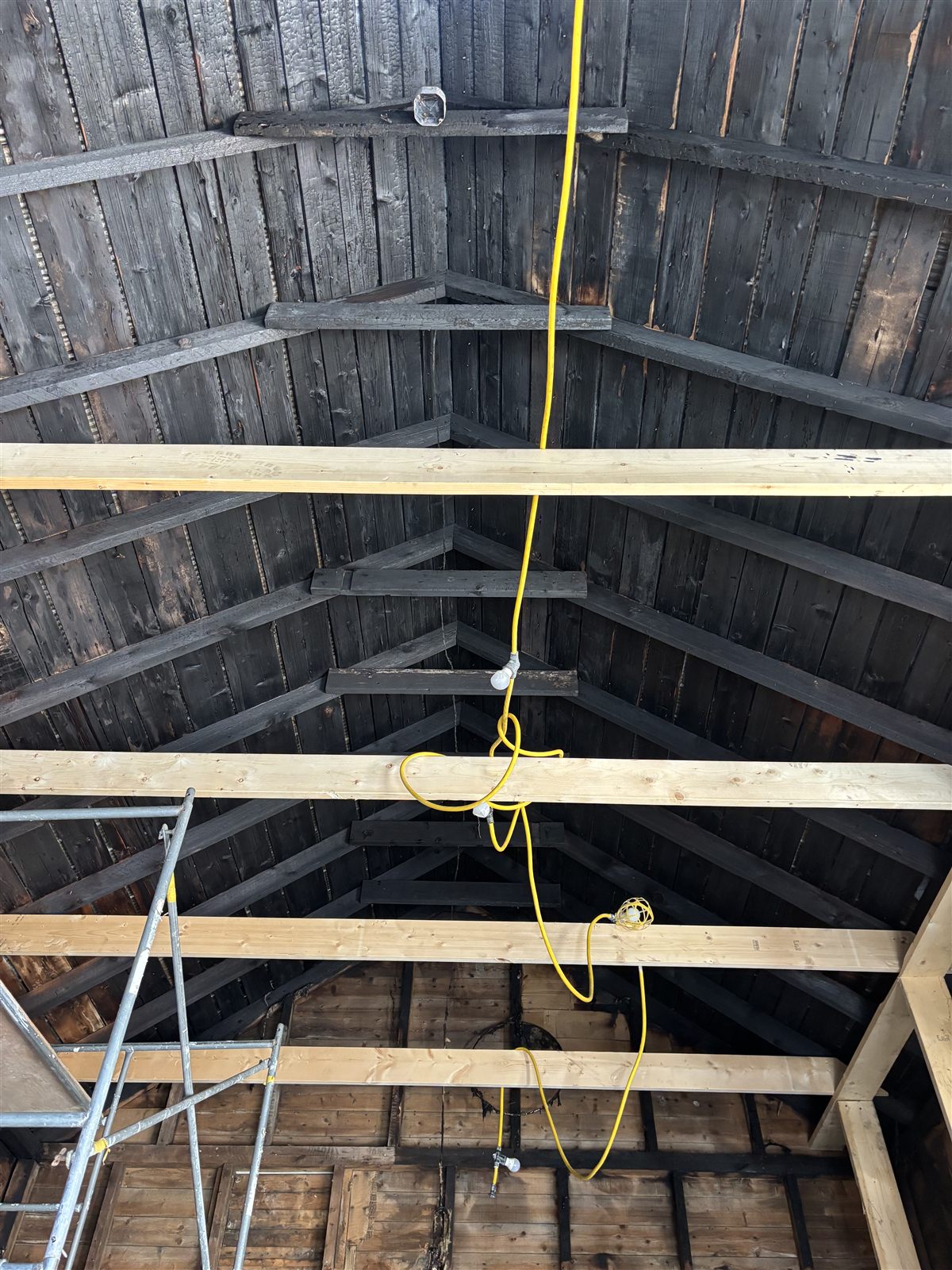
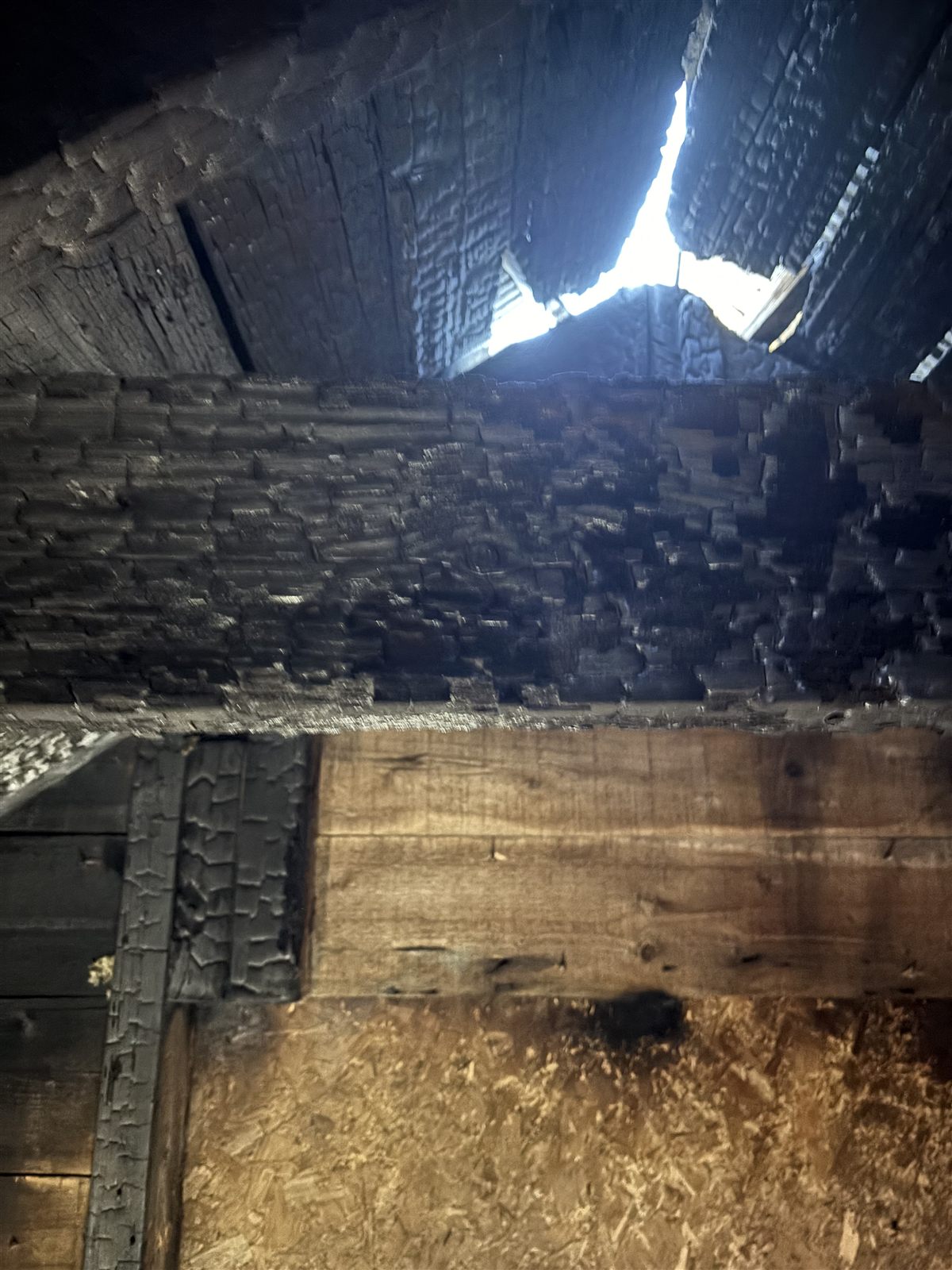
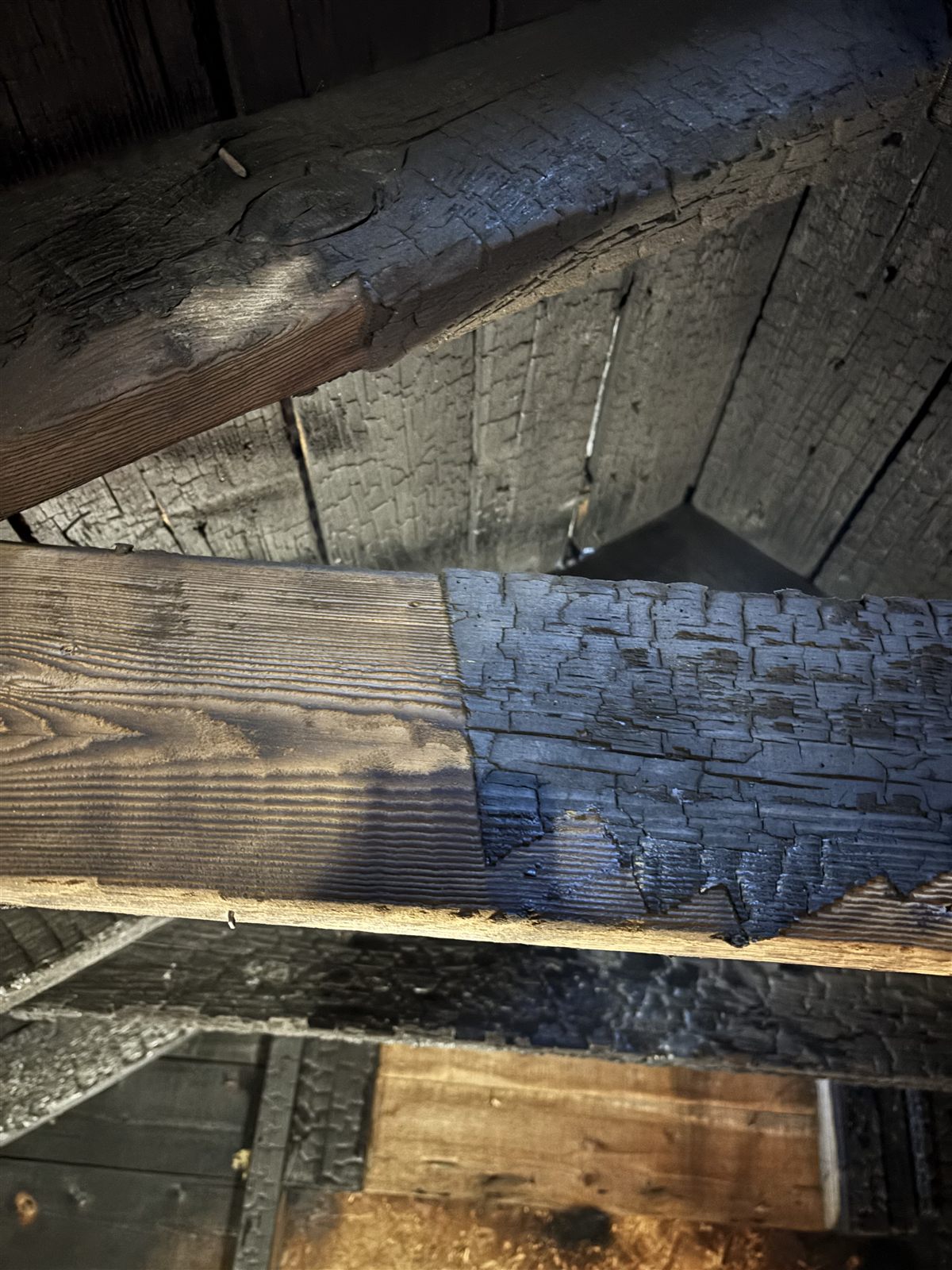
The heaviest damage was around the burn-through, where the char was deep and alligatored. Further out, the rafters and sheathing were mostly coated in soot and surface char over solid wood.
The approach
We worked overhead from scaffold across the full roof. Dry ice pellets hit the surface and sublimate, turning straight to CO2 gas. That breaks the soot and loose char away from the sound wood underneath without grinding into it. There is no blast media to sweep out of the sheathing joints and no water added to the framing. The only waste is the char itself, which comes down to the floor for clean-up.
The result
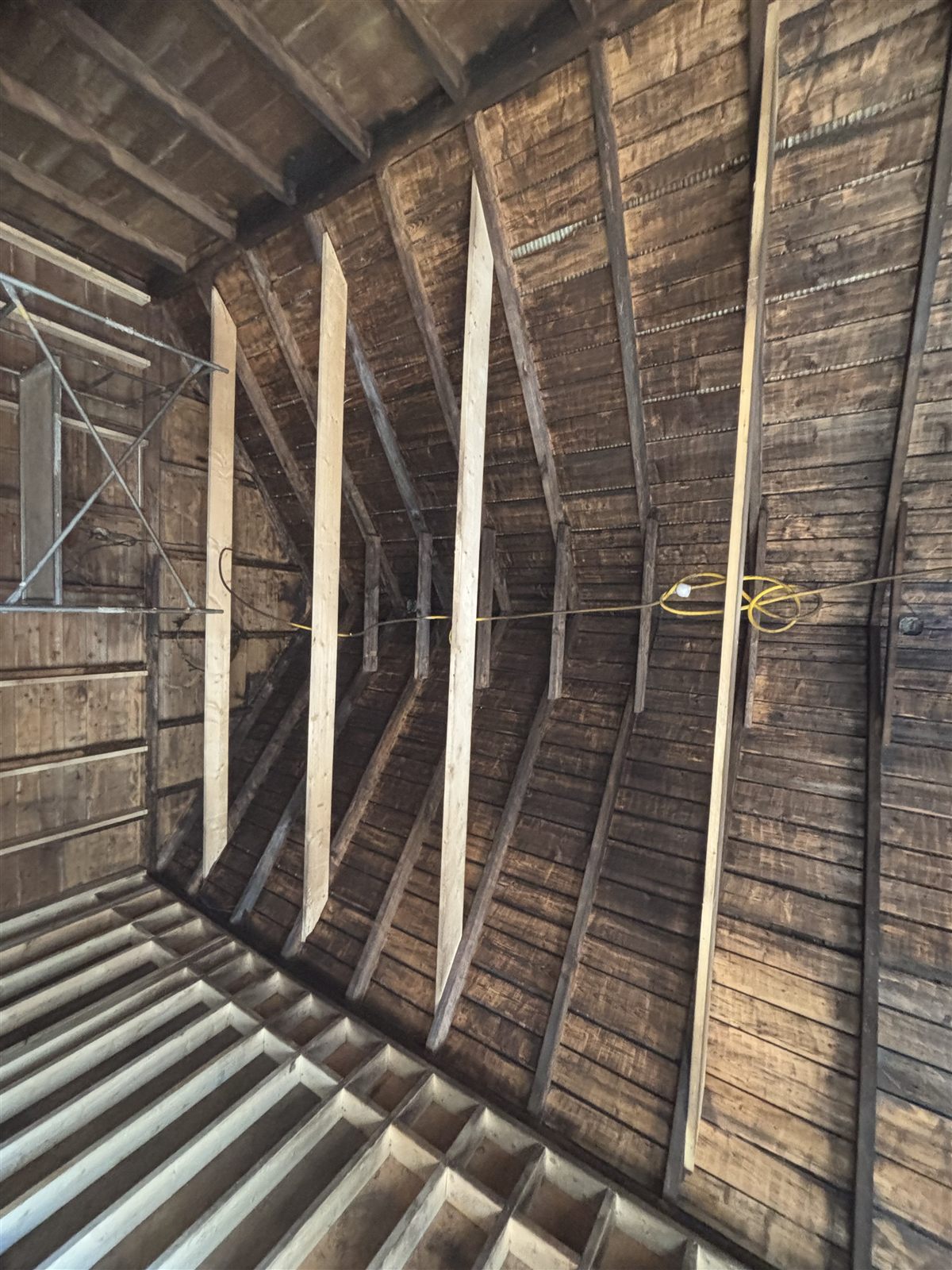
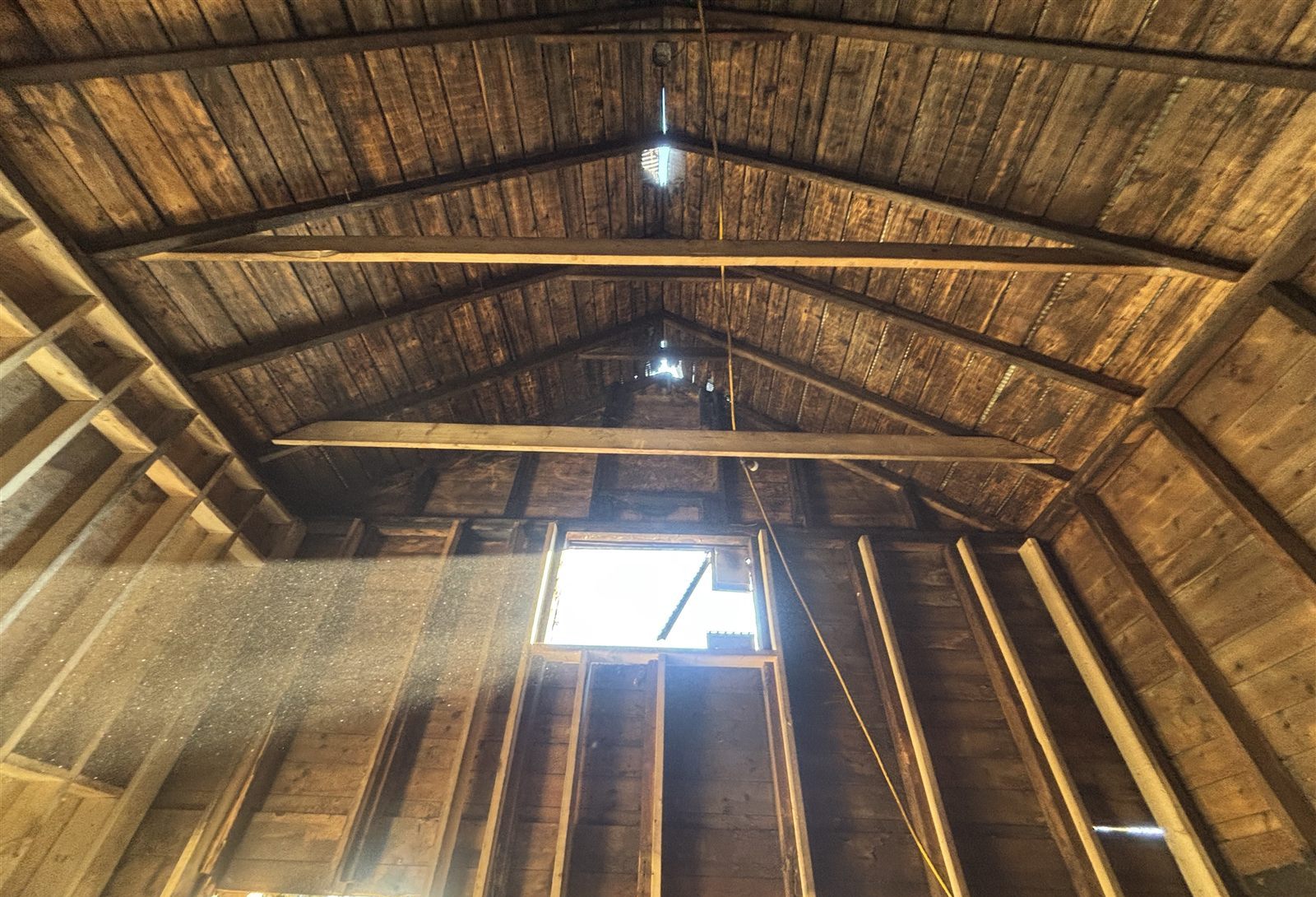
The roof framing and sheathing came back to bare, solid wood with the grain showing. The original framing stays in service, the contractor’s next trades have a clean surface to work on, and there was no media or wash water to deal with afterwards.
Why dry ice blasting for fire-damaged framing
Fire restoration comes down to what you can save. Dry ice removes the soot and char that make framing look like a write-off and leaves the sound wood underneath where it is. It adds no water to a structure that is already a claim and leaves no secondary media to clean out of joints and cavities. It also reaches overhead and awkward framing that is hard to do well by hand. For restoration contractors and adjusters, that means more of the original structure stays and the scope of repair gets smaller.
Serving Southwestern Ontario
We work with restoration contractors and insurance adjusters across London, Sarnia–Lambton, Windsor–Essex, Chatham-Kent and the surrounding area. This is our fire & smoke restoration service.
Working a fire claim? Text photos to 226-627-4878 or email scott@ontariodryiceblasting.com for a scope and quote.